
Krishna All Names: Complete Sacred Names and Their Divine Meanings
Lord Krishna is one of the most revered deities in Hinduism, and Krishna all names represent the infinite qualities, powers, and divine attributes of this beloved god. Understanding these sacred names deepens spiritual connection and devotion. This comprehensive guide explores the authentic names of Krishna from classical Hindu texts and traditions.
Significance of Krishna’s Names
Each name of Krishna carries profound spiritual meaning and reflects different aspects of his divine nature. These names are derived from the Bhagavad Gita, Puranas, and other sacred Hindu scriptures that have been studied and revered for thousands of years.
Chanting and meditating on Krishna’s names is considered a powerful spiritual practice in Hindu devotion. Devotees believe that reciting these divine names brings protection, inner peace, and divine grace.
Krishna All Names: The Complete List

Primary Names from Sacred Texts
- Krishna (dark blue, the dark one)
- Vasudeva (son of Vasudeva)
- Devaki-Nandana (son of Devaki)
- Govinda (lord of the cows)
- Gopala (protector of cows)
- Hari (the remover of sins)
- Murari (enemy of Mura demon)
- Madhava (husband of wealth)
- Madhusudan (destroyer of Madhu demon)
- Achyuta (the infallible one)
- Aniruddha (unresisted one)
- Narayana (ultimate refuge)
- Vishnu (the all-pervading one)
- Janardana (one who destroys enemies)
- Upendra (younger brother of Indra)
- Sauri (sun-like radiance)
- Shakra (mighty and powerful)
- Dhananjaya (conqueror of wealth)
- Kamalanayana (lotus-eyed one)
- Sahasrapada (thousand-footed one)
Divine Attributes and Powers
- Parameshvara (supreme lord)
- Maheshvara (great lord)
- Parambrahman (ultimate consciousness)
- Satya (truth incarnate)
- Ananta (infinite and eternal)
- Ajita (the unconquered)
- Aparajita (never defeated)
- Pushkaraksha (lotus-eyed god)
- Padmanabha (lotus-naveled)
- Raghunatha (lord of Raghus)
- Raghukulanatha (lord of Raghu dynasty)
- Bhagavan (lord of all prosperity)
- Mahapurusha (supreme person)
- Paramapurusha (ultimate person)
- Atma (the soul)
- Paramatma (supreme soul)
- Brahman (absolute reality)
- Mahavishnu (great all-pervading one)
- Yogeshvara (lord of yoga)
- Jogendra (lord of meditation)
Names Related to His Childhood and Youth
- Nanda-Nandana (son of Nanda)
- Balakrishna (child Krishna)
- Makhan-Chor (butter thief)
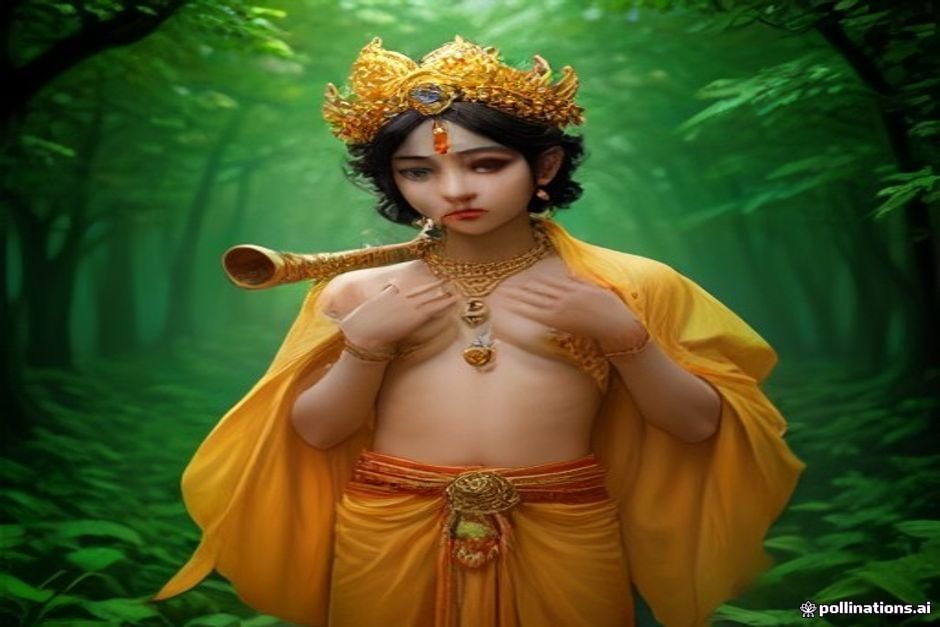
- Murlidhar (flute holder)
- Venugopala (cow herder with flute)
- Bansi-Badhan (flute player)
- Leeladhara (sustainer of cosmic play)
- Nityananda (eternal bliss)
- Ananda (joy and bliss)
- Hriday (heart of devotees)
- Manmohan (enchanter of mind)
- Mohana (enchanting one)
- Kanhaiya (dark complexion)
- Shyam (dark and handsome)
- Neelambar (dark blue clothed)
- Syamananda (dark-hued bliss)
- Bankebihari (curved, beautiful Krishna)
- Radharamana (beloved of Radha)
- Brindavana-Vihari (dweller of Brindavan)
- Mathurapati (lord of Mathura)
Names of Krishna as Warrior and Warrior-Sage
- Arjuna-Sakha (friend of Arjuna)
- Partha-Sakha (friend of Partha)
- Gita-Charya (teacher of Bhagavad Gita)
- Bhagavat-Prabhu (lord of Bhagavata)
- Kurukshetra-Sthapati (establisher of Kurukshetra)
- Chakravarti (universal sovereign)
- Mahabali (mighty and powerful)
- Yogavid (knower of yoga)
- Yogi-Raj (king of yogis)
- Divya-Rupa (divine form)
- Virat-Rupa (cosmic universal form)
- Vishvarupa (all-encompassing form)
- Lokadhyaksha (overseer of worlds)
- Lokamohana (enchanter of worlds)
- Jagat-Pati (lord of universe)
- Kaliya-Mardan (subduer of Kaliya serpent)
- Kamsa-Ari (enemy of Kamsa)
- Kamsa-Vadha (killer of Kamsa)
- Jarasandha-Shasan (defeater of Jarasandha)
- Shishupal-Vimochana (punisher of Shishupal)
Names from Cosmic and Eternal Roles
- Kala-Kara (time creator)
- Kaladhyaksha (overseer of time)
- Sarvadhipadhipati (lord of all lords)
- Sarvavidhyamaya (omniscient one)
- Sarvashaktimaan (all-powerful)
- Sarvajana (knower of all)
- Sarvadrishta (seer of all)
- Savyavahanakara (wielder of weapons)
- Chakrappa (discus bearer)
- Padmahastan (lotus in hand)
- Shakti-Dhari (bearer of power)
- Trident-Dhari (bearer of trident)
- Mahakala (lord of great time)
- Karana-Karanam (cause of all causes)
- Nimitta-Matra (mere instrument)
- Prakriti-Adhipati (lord of nature)
- Maya-Mayee (master of illusion)
- Avidya-Vimochana (remover of ignorance)
- Jnana-Vardhana (increaser of wisdom)
- Mukti-Pradayaka (giver of liberation)
Intimate Names from Devotional Traditions
- Radha-Vallabha (beloved of Radha)
- Gopi-Mohan (enchanter of gopis)
- Vraja-Vihari (dweller of Vraja)
- Rasa-Vilasa (enjoyer of divine play)
- Prema-Patra (recipient of divine love)
- Bhakta-Vatsala (affectionate to devotees)
- Janaka-Priya (beloved of people)
- Janaka-Rakshaka (protector of people)
- Guna-Avatara (incarnation of qualities)
- Pratibimba-Chaitanya (consciousness reflection)
Names from the Thousand Names Tradition
The Krishna Sahasranama, or 1000 names of Krishna, appears in various Puranas. Some additional divine names include Keshava, Dhari, Prabhava, Bhima, Chaturmukha, and Anantadrishti, each revealing unique aspects of Krishna’s divine nature.
How to Use Krishna’s Names in Practice
Devotees traditionally use these names in japa (mantra repetition), meditation, and prayer to cultivate spiritual connection. Chanting Krishna’s names with devotion is believed to purify the heart and elevate consciousness toward the divine.
Many Hindu families name their children after Krishna to invoke his divine blessings. These names serve as constant reminders of spiritual values and divine qualities throughout one’s life.
For deeper understanding of Hindu spiritual names and traditions, see 1000 Names of Lord Rama and Lalitha Sahasranamam Names for similar sacred traditions.
For more on Krishna mythology and divine names, see Wikipedia on Krishna.
Frequently Asked Questions
What does the name Krishna mean?
Krishna means ‘dark’ or ‘dark blue,’ referring to the dark complexion traditionally depicted in Hindu art and iconography.
How many names does Lord Krishna have?
Krishna has 1,000 names (Krishna Sahasranama) in various Puranic texts, though 108 primary names are most commonly used in devotional practice.
What is the significance of chanting Krishna’s names?
Chanting Krishna’s names is a devotional practice believed to purify the mind, invoke divine blessings, and deepen spiritual connection to the divine.
Can Krishna’s names be used for baby names?
Yes, Krishna’s names like Arjun, Govind, Hari, and Murari are traditionally used for naming Hindu children, carrying spiritual significance throughout their lives.
What is Krishna Sahasranama?
Krishna Sahasranama refers to the 1,000 sacred names of Krishna mentioned in various Hindu Puranas, each describing his divine attributes and cosmic powers.