
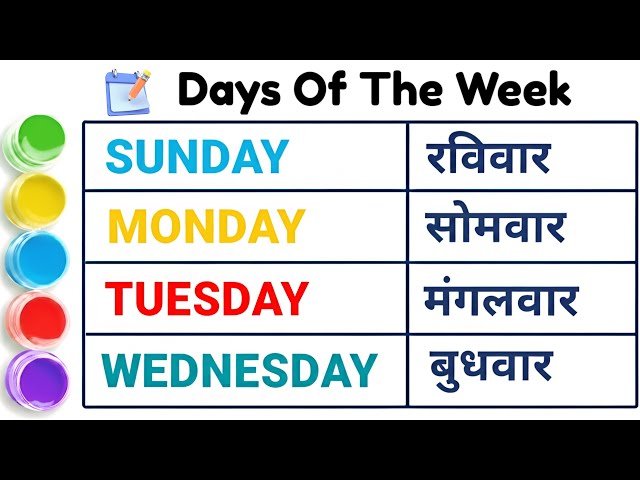
Hindi Week Names: Complete Guide to Days of the Week in Hindi
Understanding hindi week names is essential for anyone learning the Hindi language or engaging with Indian culture. The seven days of the week in Hindi carry both linguistic beauty and cultural significance, each with its own meaning rooted in Sanskrit and ancient Hindu traditions. Whether you’re a student, traveler, or cultural enthusiast, mastering these names will deepen your connection to the language and help you navigate daily conversations with native speakers.
Hindi Week Names and Their Meanings
The days of the week in Hindi follow a traditional naming system that dates back centuries. Each day is associated with celestial bodies and deities in Hindu mythology, making the naming system both poetic and meaningful.
Monday (सोमवार – Somvar)
Monday is called Somvar in Hindi, derived from the Sanskrit word “Soma,” which means the Moon. This day is traditionally associated with the Moon and is considered auspicious for starting new ventures related to water, peace, and emotional well-being.
Tuesday (मंगलवार – Mangalvar)
Mangalvar is the Hindi name for Tuesday, derived from “Mangal,” which represents Mars in Hindu astrology. This day is associated with energy, courage, and action, and is often linked to the color red in traditional practices.
Wednesday (बुधवार – Budhvar)
Wednesday is known as Budhvar in Hindi, coming from “Budh,” the Sanskrit name for Mercury. This day is traditionally associated with intelligence, communication, and business, making it an auspicious day for starting educational or commercial endeavors.
Thursday (गुरुवार – Guruvar)
Guruvar is the Hindi name for Thursday, derived from “Guru,” which means teacher or Jupiter in Hindu astrology. This day is considered highly auspicious for learning, spiritual pursuits, and seeking wisdom from elders and mentors.
Friday (शुक्रवार – Shukravar)
Friday is called Shukravar in Hindi, stemming from “Shukra,” which represents Venus in Sanskrit. This day is associated with beauty, love, creativity, and prosperity, and holds special significance in many Hindu and cultural traditions.
Saturday (शनिवार – Shanivar)
Shanivar is the Hindi name for Saturday, derived from “Shani,” representing Saturn. This day carries a more serious tone in traditional beliefs and is often associated with hard work, discipline, and reflection.
Sunday (रविवार – Ravivar)
Sunday is known as Ravivar in Hindi, coming from “Ravi,” the Sanskrit word for the Sun. This day is considered the most auspicious in many Hindu traditions and is associated with vitality, health, and spiritual enlightenment.
Pronunciation Guide for Week Names

Proper pronunciation is crucial for effective communication. Here’s how to correctly pronounce each day of the week in Hindi:
- Somvar – Pronounced as “SOM-vahr” with emphasis on the first syllable
- Mangalvar – Pronounced as “MUN-gul-vahr” with stress on the first syllable
- Budhvar – Pronounced as “BOODH-vahr” with a long ‘oo’ sound
- Guruvar – Pronounced as “GOO-roo-vahr” with emphasis on the first syllable
- Shukravar – Pronounced as “SHOO-kruh-vahr” with clear articulation of each syllable
- Shanivar – Pronounced as “SHUH-nee-vahr” with equal stress throughout
- Ravivar – Pronounced as “RUH-vee-vahr” with emphasis on the middle syllable
Cultural and Astrological Significance of Each Day
In Hindu culture and Vedic astrology, each day holds particular importance beyond mere timekeeping. Understanding this significance enriches your appreciation of Hindi language and culture.
Somvar – Day of Introspection
Monday in Hindi culture is considered a day for meditation and introspection. Devotees often visit temples and perform rituals dedicated to Lord Shiva on this day, believing it brings mental peace and emotional stability.
Mangalvar – Day of Strength
Tuesday is associated with strength and courage in Hindu traditions. Many people avoid important decisions on this day, considering it a time for patience and careful planning rather than impulsive action.
Budhvar – Day of Wisdom
Wednesday is traditionally considered the best day for beginning educational pursuits or business ventures. Students often start new courses on Budhvar, and merchants conduct important transactions on this auspicious day.
Guruvar – Day of Blessings
Thursday holds special spiritual importance in Hindu culture. Worshipping Guru (Jupiter) on this day is believed to bring wisdom, prosperity, and blessings to one’s life and family.
Shukravar – Day of Abundance
Friday is considered favorable for matters of the heart, creative endeavors, and financial prosperity. Many important social and religious ceremonies are scheduled on Shukravar for maximum auspiciousness.
Shanivar – Day of Karma
Saturday represents karma and discipline in Hindu philosophy. It’s a day to reflect on one’s actions and work diligently, with the belief that dedicated effort on this day yields long-term benefits.
Ravivar – Day of Success
Sunday is the most auspicious day in the Hindu calendar, associated with the Sun God (Surya). Many important events, ceremonies, and new beginnings are scheduled on Ravivar for success and prosperity.
How to Choose and Learn Week Names Effectively
Learning hindi week names becomes easier and more meaningful when you employ the right strategies. Here are practical tips for mastering this essential vocabulary:
- Associate with Deities – Connect each day with its corresponding celestial body or deity to create memorable mental links that aid retention
- Practice Daily Repetition – Write and speak each day name daily to build muscle memory for proper pronunciation and spelling
- Use Flashcards – Create bilingual flashcards with the English day, Hindi name, Sanskrit meaning, and cultural significance for comprehensive learning
- Listen to Native Speakers – Watch Hindi movies, news channels, or educational videos to hear authentic pronunciation from native speakers
- Create Context Sentences – Frame sentences using day names in your daily routine (“Somvar ko main temple jata hoon” – I go to temple on Monday)
- Group Learning – Study with friends or language exchange partners to practice conversation naturally incorporating day names
Related Resources and Hindi Language Learning
Learning days of the week is just one step in mastering Hindi. If you’re interested in expanding your Hindi vocabulary further, consider exploring modern Hindu girl names or other cultural naming traditions that deepen your understanding of the language. Additionally, understanding sacred Hindu names and their meanings provides cultural context that enriches your language learning experience.
For more on Hindi language and naming traditions, see Wikipedia’s Hindi Language Resource.
Frequently Asked Questions
Why do Hindi days have celestial associations?
Hindi day names are rooted in ancient Vedic astrology and Sanskrit traditions. Each day was assigned to a celestial body or deity to create a comprehensive system linking astronomy with daily life and spiritual practices.
Is the Hindi week system still used in modern India?
Yes, hindi week names are still widely used in India alongside the English day names. They remain important in cultural, religious, and astrological contexts, and many Hindi speakers use them in everyday conversation.
Can I use these day names in formal Hindi writing?
Absolutely. Hindi week names are appropriate for both formal and informal contexts, including business communication, educational settings, and personal correspondence in Hindi.
What’s the best way to remember the order of days in Hindi?
Create a mnemonic device or memorable phrase using the first letters of each day in order. Many learners find that connecting each day to its celestial meaning helps create a logical sequence that’s easier to recall.
Mastering hindi week names opens doors to deeper cultural understanding and more confident communication in Hindi-speaking communities. With consistent practice and mindful learning, you’ll soon use these terms naturally in conversation.